
Working out what a cocktail actually measures after the ice melts
This article explains the cocktail ABV calculator, covers every input field and mixing method, walks through a real drink with concrete numbers, and clears up the confusion between dilution, strength, and the amount of alcohol that ends up in the glass.
Why the label on the bottle is not the strength in the glass
A bottle of gin says 40 percent. A bottle of vermouth says 18 percent. Mix them with ice and what lands in the glass is neither of those numbers. It is a weighted average of everything you poured, diluted further by the water that melted off the ice while you stirred or shook.
Knowing the result matters for several reasons. A bartender designing a menu needs drinks that fall in a comfortable range. A host planning a party wants to know how strong the punch actually is before filling a bowl. A home mixer who finds a recipe online wants to check whether the drink will taste balanced or whether it will burn.
Most classic cocktails land between about 20 and 30 percent in the glass after dilution. Much above 30 and the drink tastes harsh. Much below 20 and it starts to feel watery. The calculator lets you experiment with proportions and see the result before you pour anything.
Entering the ingredients
The panel on the right side of the page is headed The build. It has room for up to four ingredients. Each ingredient is a pair of fields: a volume in millilitres and a strength as a percentage.
For spirit-based ingredients, enter the volume and the ABV printed on the label. For juice, syrup, soda, or any other non-alcoholic liquid, enter the volume and set the strength to zero. The zero-strength ingredient still matters because it adds volume, which is what pulls the overall percentage down.
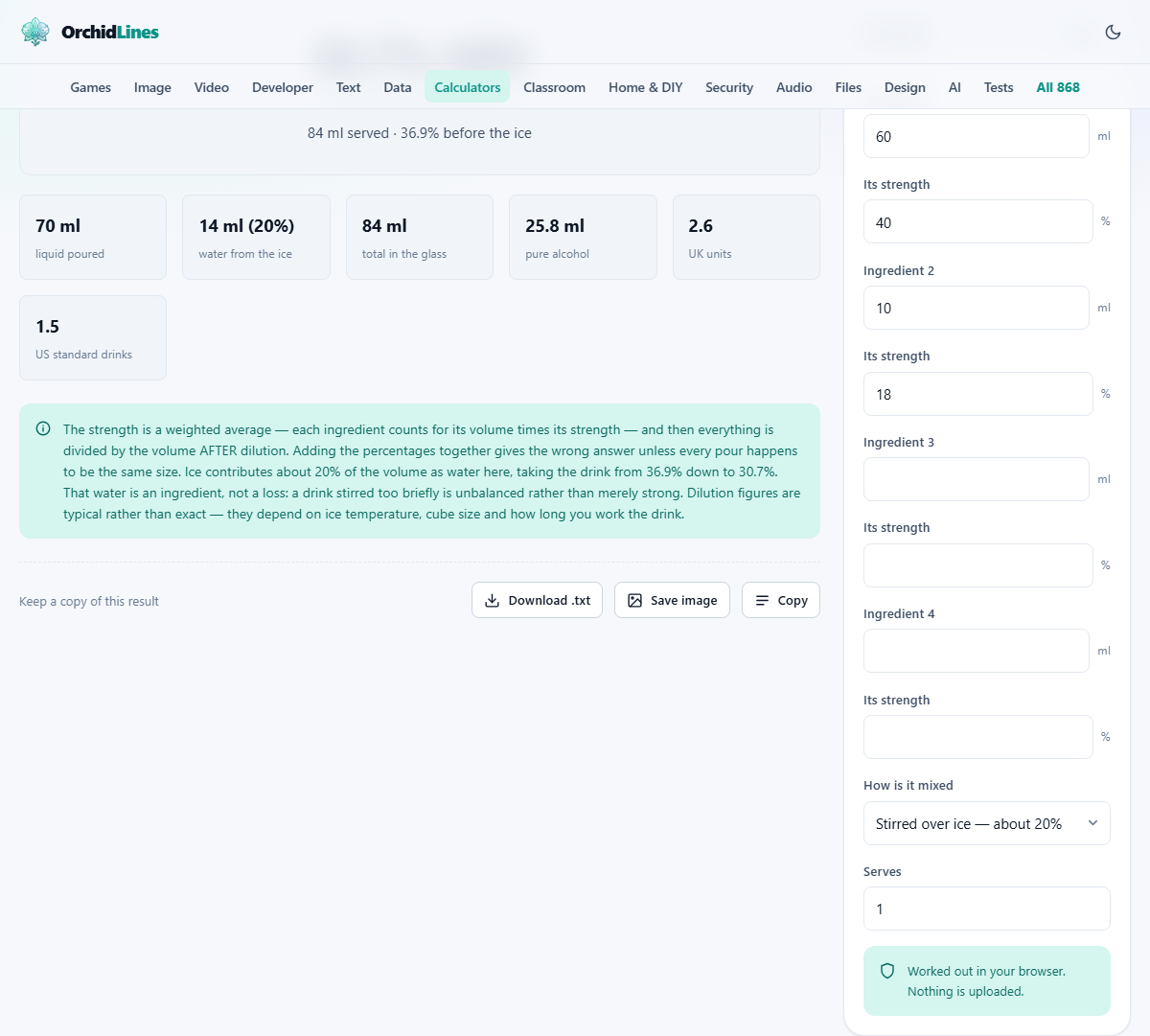
The defaults show a simple two-ingredient build: 60 ml at 40 percent and 10 ml at 18 percent. That is roughly a gin Martini with a splash of dry vermouth. You can clear any field you do not need or fill in all four for a more complex recipe.
The mixing method and what it changes
Below the ingredient fields sits the dropdown labelled How is it mixed. It offers five choices, each with an approximate dilution figure shown next to it.
Stirred over ice adds about 20 percent of the total volume as water. This is the standard for spirit-forward drinks like Martinis and Manhattans, where you want the drink cold and slightly softened but not foamy.
Shaken with ice adds about 27 percent. Shaking breaks up the ice and throws it against the liquid much harder than stirring does, so more surface area melts in a shorter time. Shaken drinks also pick up tiny air bubbles that change the texture.
Built over ice adds about 15 percent. A built drink is poured straight over cubes in the serving glass and left to chill slowly. The dilution is lower because the drink sits still.
Blended adds about 45 percent. Everything goes into a blender with ice and gets pulverised. The ice breaks into tiny fragments that melt almost completely, which is why frozen drinks are both cold and relatively weak.
No ice means no dilution at all. The volume in the glass is exactly what you poured. This option is there for drinks served straight up from a warm mix or for checking the pre-dilution strength of any recipe.
Serves and scaling up
The Serves field multiplies every ingredient by the number you enter. If your recipe is for one drink and you need eight, type 8. The result shows the total volume and total alcohol for the whole batch, which is useful when you are mixing a pitcher or a punch bowl.
The per-drink figures do not change when you scale up. The strength in the glass stays the same whether you are making one or forty. What changes is the total amount of liquid you need to prepare and the total units of alcohol involved, both of which matter when you are shopping or planning ahead.
What the output shows
The result includes the ABV before dilution, the ABV after dilution, the total volume in the glass, and the alcohol units. The pre-dilution figure tells you the strength of the combined pour before any ice does its work. The post-dilution figure is what you actually drink.
Alcohol units are calculated using the UK formula: volume in millilitres times ABV as a decimal divided by ten. One unit is 10 ml of pure alcohol, which is roughly half a pint of ordinary-strength beer or a small glass of wine. A Negroni made with 30 ml each of gin, vermouth, and Campari carries about 2.5 units before you even think about dilution.
The volume figure counts the water from the ice as part of the drink. It is the total liquid that ends up in your glass or your pitcher. For a single stirred Martini with 70 ml of combined pours and 20 percent dilution, that comes to about 84 ml.
Worked example: a classic Negroni
Set Ingredient 1 to 30 ml at 40 percent for gin. Set Ingredient 2 to 30 ml at 25 percent for Campari. Set Ingredient 3 to 30 ml at 18 percent for sweet vermouth. Leave Ingredient 4 empty. Choose Stirred over ice as the method.
The pre-dilution volume is 90 ml. The combined strength before ice is about 27.7 percent because it is a volume-weighted average of 40, 25, and 18, each contributing equally. After stirring adds about 18 ml of water, the volume in the glass rises to about 108 ml and the ABV drops to around 23 percent.
The alcohol units stay the same before and after dilution, because dilution adds water but does not remove alcohol. This is the single most misunderstood point about ice in cocktails. The drink feels lighter because the percentage dropped, but the amount of alcohol in the glass is exactly what you poured.
Common mistakes and misunderstandings
The first mistake is adding percentages together. If you pour 30 ml at 40 percent and 30 ml at 0 percent, the result is not 40 percent. It is 20 percent, because you doubled the volume while keeping the alcohol the same. Strength is a ratio of alcohol to total liquid, and adding more liquid changes the ratio even when no new alcohol goes in.
The second is confusing a lower percentage with less alcohol. A well-diluted drink has a lower ABV but exactly the same units as the same recipe served without ice. Dilution changes how strong the drink tastes, not how much alcohol reaches your bloodstream.
A third error is treating the dilution figures as exact measurements. How much water a drink picks up depends on the temperature of the ice, the size of the cubes, how long you stir, and how hard you shake. The percentages built into the tool are good averages, not laboratory readings. A bartender who stirs for thirty seconds will get a different result from one who stirs for sixty.
When this calculator is not enough
The tool works well for most drinks built from a short list of ingredients at known strengths. It does not handle egg white, cream, or other ingredients that add body but not volume in a simple way. It also does not model the effect of sugar on perceived sweetness or the way temperature changes how strong a drink tastes.
For professional bar work where you need to hit a target ABV precisely, you would normally measure dilution by weighing the drink before and after mixing rather than relying on a percentage estimate. The calculator gives you a solid starting point, but the final answer lives in the glass.
It is also worth noting that batched cocktails behave differently from individual ones. When you pre-mix a large batch and refrigerate it, you might add the water yourself rather than relying on ice. In that case you would choose No ice for the method and add an extra ingredient at 0 percent strength to represent the water you stirred in. The total volume and final ABV will then reflect what your guests actually drink from the bottle or the dispenser.
Privacy
All the arithmetic runs in your browser. No recipes, no volumes, and no results are sent anywhere. Nothing is stored between visits and there is no login. The page is a calculator, not a service, and it keeps nothing once you close the tab.